
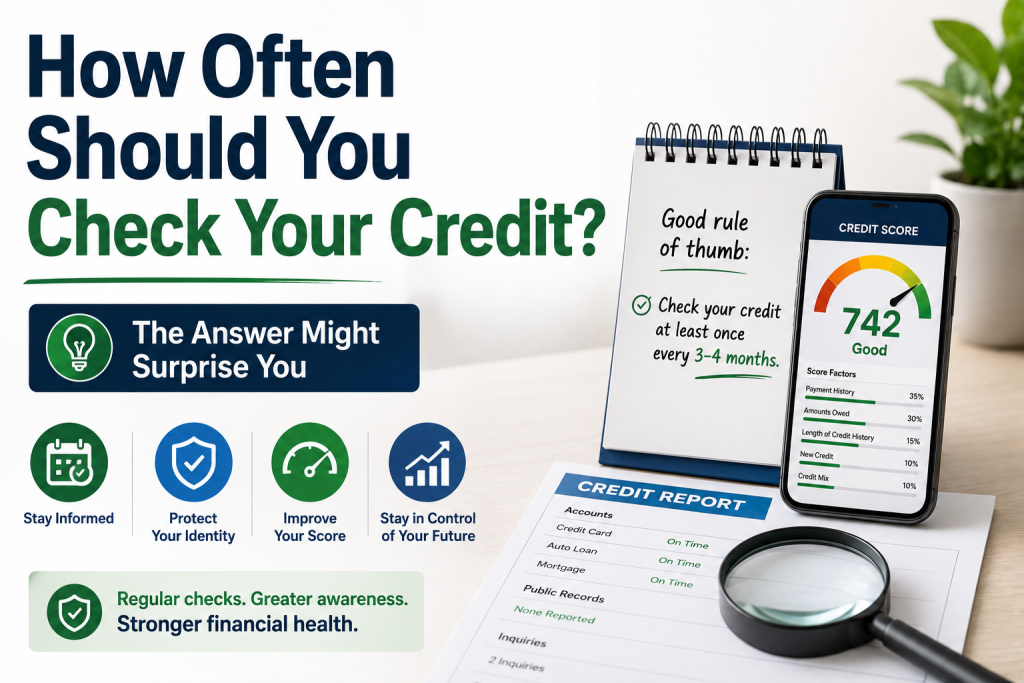
How Often Should You Check Your Credit? The Answer Might Surprise You

INTRODUCTION
How often should you check your credit? The answer might surprise you. Many people check their credit score once a year or only when they apply for a loan. Others check it obsessively every day. Neither approach is ideal. The right frequency balances staying informed without becoming obsessed, and it depends on your specific financial situation.
Your credit report and credit score are dynamic. They change as new information is reported by your lenders and creditors. Checking your credit regularly helps you catch errors, monitor for identity theft, and track your progress toward your financial goals. But checking too often can create unnecessary anxiety and may lead to costly mistakes. This guide provides clear recommendations on how often you should check your credit, why it matters, and how to do it effectively.
WHY CHECKING YOUR CREDIT MATTERS
Checking your credit is not just about knowing your score—it is about protecting your financial health. There are several important reasons to check your credit regularly. The first is to catch errors on your credit report. Credit report errors are surprisingly common. A study by the Federal Trade Commission found that one in five consumers had an error on at least one of their credit reports. These errors can lower your credit score, making it harder to qualify for loans or get the best interest rates. Catching and correcting these errors is essential for maintaining a healthy credit score.
The second reason is to monitor for identity theft. Identity theft is a growing problem. Criminals can open accounts in your name, run up debt, and damage your credit before you even know it. Regular credit monitoring helps you spot suspicious activity early and take action to stop it. The third reason is to track your progress. If you are working to build or improve your credit, checking your credit regularly helps you see if your efforts are paying off. Seeing your score improve can be motivating and helps you stay on track with your financial goals. The fourth reason is to prepare for major financial decisions. If you are planning to apply for a mortgage, car loan, or credit card, checking your credit beforehand helps you know what to expect. You can address any issues before they affect your application.
HOW OFTEN SHOULD YOU CHECK YOUR CREDIT REPORT?
The general recommendation is to check your credit report at least once a year. You are entitled to one free credit report from each of the three major credit bureaus—Equifax, Experian, and TransUnion—every 12 months. This means you can check your credit reports three times a year by staggering your requests. Instead of requesting all three reports at once, request one report every four months. This gives you year-round monitoring without paying for extra reports.
If you are actively working to improve your credit, you may want to check your credit reports more frequently. Checking every three to six months can help you track your progress and catch issues early. If you are planning a major financial decision, such as applying for a mortgage, check your credit reports at least three to six months in advance. This gives you time to correct any errors and improve your score before you apply. If you have been a victim of identity theft or suspect you may have been, check your credit reports immediately. You may also consider placing a fraud alert or credit freeze on your reports.
HOW OFTEN SHOULD YOU CHECK YOUR CREDIT SCORE?
The answer for credit scores is different from credit reports. While checking your credit report is about accuracy, checking your credit score is about tracking your progress. Your credit score changes as new information is added to your credit report. Checking your score more frequently helps you see how your financial behaviors are affecting your score.
A good rule of thumb is to check your credit score once a month. Monthly checks help you track trends and catch sudden drops that might indicate a problem. If you are actively working to build or improve your credit, checking every two to four weeks can help you see the impact of your efforts. If you are not actively working on your credit, checking every two to three months is sufficient. If you are preparing to apply for a major loan, checking your score more frequently in the months leading up to the application can help you gauge your readiness.
WHERE TO CHECK YOUR CREDIT FOR FREE
Several sources offer free credit reports and credit scores. The most reliable source for free credit reports is AnnualCreditReport.com. This is the only website authorized by the federal government to provide free credit reports from the three major credit bureaus. You can also get free credit reports from your bank, credit card company, or credit union. Many financial institutions now offer free credit score monitoring as a benefit to their customers.
For free credit scores, you have several options. Many credit card companies and banks offer free credit score monitoring. You can also get free credit scores from websites like Credit Karma, Credit Sesame, and WalletHub. These services provide VantageScores, which are educational scores that can help you track your progress. Remember that the score you see for free may not be the same score a lender sees. Lenders typically use FICO scores, which may differ from VantageScores.
WHAT TO LOOK FOR WHEN CHECKING YOUR CREDIT
When you check your credit report, you are looking for specific things. Personal information should be correct, including your name, address, and Social Security number. Inaccurate personal information could indicate identity theft or a mix-up with someone else’s credit file. Credit account information should be accurate, including account balances, credit limits, and payment history. Errors in this section can significantly affect your credit score. Inquiries should be ones you authorized. Unauthorized inquiries could be a sign of identity theft. Negative information should be accurate and within the reporting timeframe. Negative items generally stay on your credit report for seven years, with bankruptcy staying for 10 years.
When you check your credit score, you are looking for changes over time. Is your score going up, down, or staying the same? Understanding the trend helps you know if your financial habits are improving or if you need to make changes. You should also look at the factors affecting your score. Most credit score monitoring services provide an explanation of the top factors affecting your score. Use this information to focus your improvement efforts.
COMMON MISTAKES TO AVOID
Checking your credit is important, but there are some common mistakes to avoid. Mistake 1: Checking too often. While checking your own credit does not hurt your score, checking it obsessively can create unnecessary anxiety. Check your credit regularly but not daily. Mistake 2: Ignoring your credit reports. Checking your credit score is not enough—you also need to check your credit reports for errors. Your credit score is based on your credit reports, so errors on your reports will affect your score. Mistake 3: Not disputing errors. If you find errors on your credit report, dispute them. The dispute process is free and can result in significant score improvements. Mistake 4: Assuming free scores are accurate. Free credit scores are helpful for tracking trends, but they may not be the same scores lenders use. Check your FICO score before applying for major loans. Mistake 5: Checking your credit only when applying for credit. Waiting until you apply for a loan to check your credit leaves you no time to correct errors or improve your score. Check your credit regularly so you know where you stand.
A MONITORING SCHEDULE THAT WORKS
Here is a simple credit monitoring schedule that balances staying informed without becoming obsessive. Monthly, check your free credit score from your bank, credit card company, or a free service. Look for trends and changes. Quarterly, check your credit report from one of the three credit bureaus. Stagger your requests to get year-round coverage. Annually, review all three credit reports and check for any discrepancies. Before a major financial decision, check your credit score three to six months in advance. This gives you time to correct errors and improve your score if needed. If you have been a victim of identity theft, check your credit reports immediately and consider placing a fraud alert or credit freeze on your reports.
HOW TO DISPUTE CREDIT REPORT ERRORS
If you find an error on your credit report, you can dispute it with the credit bureau. The dispute process is free and can be done online, by mail, or by phone. When you dispute an error, you should provide documentation to support your claim. The credit bureau must investigate your dispute within 30 days and correct any errors they find. If the dispute is resolved in your favor, the credit bureau will update your credit report and send you a copy of the updated report. You can also request that the credit bureau send the corrected report to anyone who recently received your report.
If the credit bureau does not resolve your dispute, you can add a statement of dispute to your credit report. This statement explains your side of the issue and is included in future credit reports. You can also file a complaint with the Consumer Financial Protection Bureau (CFPB) if you believe the credit bureau has not handled your dispute properly.
THE IMPACT OF IDENTITY THEFT ON YOUR CREDIT
Identity theft is a serious threat to your credit. When someone steals your identity, they can open credit accounts in your name, run up debt, and damage your credit before you even know it. The first sign of identity theft is often a sudden drop in your credit score or unfamiliar accounts on your credit report. If you suspect identity theft, take immediate action. Contact one of the three credit bureaus to place a fraud alert on your credit reports. A fraud alert requires creditors to verify your identity before opening new accounts in your name. You can also place a credit freeze on your reports, which prevents creditors from accessing your credit reports and makes it difficult for identity thieves to open new accounts.
File a report with the Federal Trade Commission (FTC) at IdentityTheft.gov. The FTC can provide a recovery plan and help you take the steps needed to recover from identity theft. You should also contact the police and file a report. A police report can help you dispute fraudulent accounts with creditors and credit bureaus.
CONCLUSION
How often you should check your credit depends on your financial situation. At a minimum, you should check your credit report once a year and your credit score monthly. If you are actively building or improving your credit, check more frequently. If you are planning a major financial decision, check your credit well in advance. Regular credit monitoring helps you catch errors, prevent identity theft, and track your progress toward your financial goals. It is an essential part of managing your financial health. By following the schedule outlined in this guide, you can stay informed without becoming obsessed.
About the Author: The Financial Education Team is dedicated to helping individuals build strong financial foundations through clear, actionable guidance on credit, saving, and wealth-building.
Disclaimer: This article is for informational purposes only and should not be considered financial or investment advice. Always conduct your own research or consult a qualified financial advisor before making financial decisions.